Common van insurance add-ons: which extras are worth considering?
Van insurance add-ons can make a real difference to what your policy actually does when something goes wrong. This guide explains the most common extras and which ones may be worth paying for.
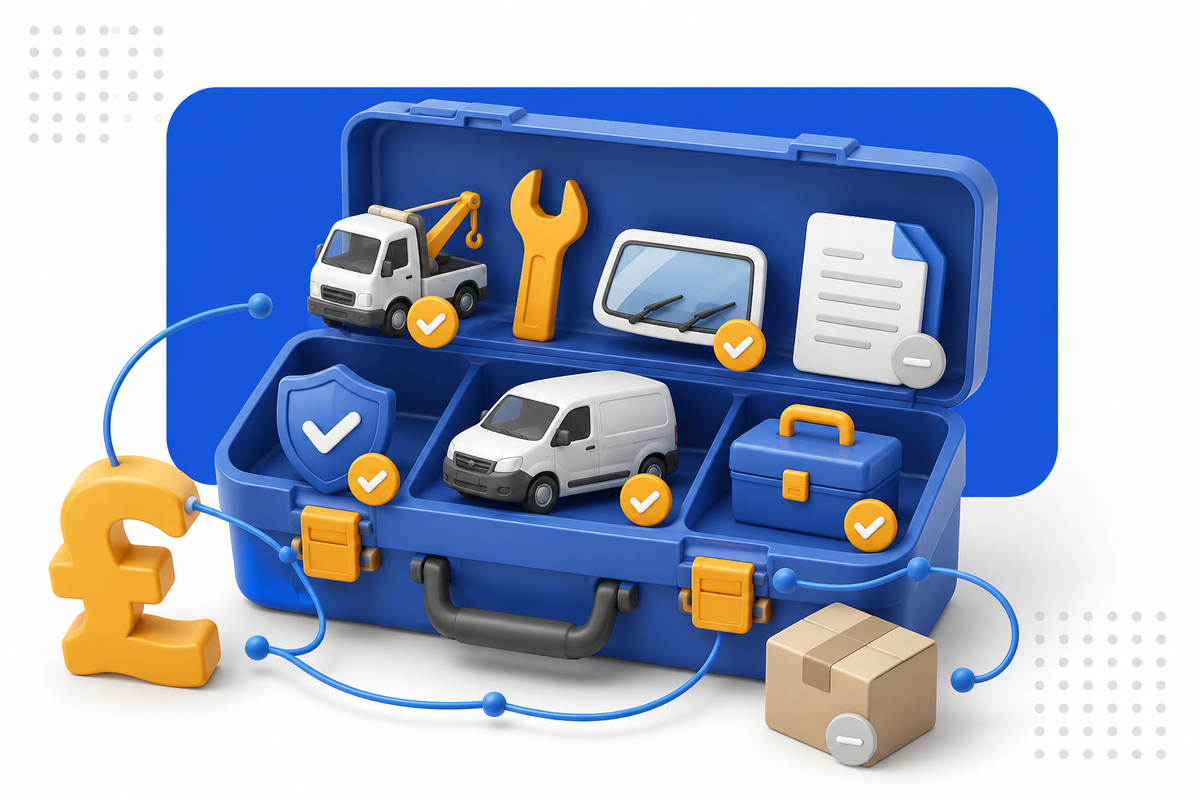
When you buy van insurance, the headline premium is only part of the story. Many policies also come with optional extras, and these can make a real difference to what the cover actually does when something goes wrong.
Some add-ons are genuinely useful. Others sound reassuring but may overlap with cover you already have, or may not be worth the extra cost for the way you use your van.
This guide explains the most common van insurance add-ons, what they usually cover, and how to think about them before you pay more than you need to.

Why add-ons matter on van insurance
Van drivers often rely on their vehicle more heavily than private car drivers. If a van is stolen, damaged, broken down, or off the road after a claim, the effect can spill straight into missed jobs, lost income, and admin hassle.
That is why add-ons can matter more with vans than they might with ordinary private car use. The right extra may help with:
- staying mobile after a breakdown
- replacing stolen tools or customer goods
- reducing the impact of an accident
- dealing with legal or recovery costs
The key is to understand what is actually included, rather than assuming a more expensive policy automatically means better protection.

Breakdown cover
Breakdown cover is one of the most common van insurance add-ons.
It can help if the van breaks down and needs:
- roadside assistance
- recovery to a garage
- home start
- onward travel or replacement transport, depending on the level of cover
For working vans, this can be one of the more useful extras because downtime matters. But the value depends on what level is included. Basic roadside help is very different from a stronger package that also helps with recovery or onward travel.
If you already have standalone breakdown cover elsewhere, check for overlap before adding it again.
Relevant article: How to Choose the Right Breakdown Cover for Your Van and Save Money
Courtesy van or replacement vehicle cover
This add-on is about what happens if your van cannot be used after an insured incident.
Depending on the policy, it may help with:
- a courtesy van while repairs are being done
- a temporary replacement vehicle
- some transport support while your van is off the road
This matters most for drivers who cannot easily work without a van. But the detail matters a lot. A replacement vehicle may not be like-for-like, may not match payload or fittings, and may only be available in certain claim situations.
So this is one of those extras where the name sounds straightforward, but the wording really matters.
Relevant article: Courtesy vans and hire vehicles: why small firms are struggling to stay mobile after a claim
Tools cover
Tools cover is a very common add-on for tradesmen.
It is designed to protect tools kept in or around the van, usually against risks like:
- theft
- accidental damage
- sometimes fire, depending on the wording
This is often useful, but it is also one of the most misunderstood extras. Policies may include limits, security conditions, forced-entry requirements, overnight exclusions, and exclusions for certain items.
So tools cover can be valuable, but only if you understand what the policy actually means by “covered”.
Relevant article: Tools cover on van insurance: what is actually covered and common gaps
Goods in transit cover
Goods in transit cover is more relevant where the van carries items connected to paid work, especially customer goods or delivery items.
It is often used by:
- couriers
- delivery drivers
- some small operators transporting goods for others
- businesses carrying stock or items linked to a service
This add-on is not the same thing as normal van insurance. It is about what is inside the van, not just the vehicle itself.
For some drivers it is essential. For others it may be irrelevant. The important thing is not to assume this is included automatically.
Relevant article: Hire & Reward vs Goods in Transit: What is the Difference?
Public liability insurance
Public liability insurance is often offered alongside van insurance, especially for business users.
It is designed to help if your work causes injury to someone else or damage to their property in a non-motor context.
Examples might include:
- a customer tripping over equipment while you unload
- damage caused while carrying materials into a property
- a work-related incident not covered by the motor section of the policy
This is often useful for tradesmen and delivery drivers, but not every buyer needs it through the van policy itself. Some businesses already have separate public liability cover elsewhere.
Legal expenses cover
Legal expenses cover is a common extra on both car and van insurance.
It may help with legal costs linked to issues such as:
- recovering uninsured losses after an accident
- disputes following a non-fault incident
- access to legal support or advice, depending on the provider
This can be useful, but it is often sold very routinely, and not all buyers stop to think about whether they already have some legal protection through another route.
It is not necessarily a bad add-on. It is just one that needs a bit of thought rather than an automatic yes.
Windscreen cover
Windscreen cover helps with repair or replacement of damaged glass.
This is often included in comprehensive policies, but not always in the same way. Sometimes it is an add-on, sometimes it is built in, and sometimes there are specific excesses or approved repair rules.
For a van driver covering high mileage, windscreen damage is not rare, so this can be a useful area to check closely even when it is not a separately priced extra.
Excess protection
Excess protection is designed to help recover the excess you have to pay following a claim, up to a stated limit.
This can appeal to drivers who have chosen a high voluntary excess to keep the premium down. In theory, it gives you some protection against the sting of a later claim.
But it is one of those add-ons where you need to look carefully at the cost, the claim rules, and whether you are simply paying to soften a pricing choice you made earlier.
Relevant article: Van insurance excess explained: compulsory, voluntary and what they really change
No claims bonus protection
No claims bonus protection is a common extra, especially for drivers who have built up several claim-free years.
It is designed to help preserve your no claims discount after a certain number of claims, depending on the insurer’s rules.
This can be useful, but it is often misunderstood. Protecting the no claims bonus does not usually mean the premium itself cannot rise after a claim. It usually means the discount level is less affected.
Relevant article: No claims bonus for van insurance: how it really works.
European use or foreign travel cover
If you take your van abroad, this is an area worth checking.
Some policies include a limited amount of European use. Others make it an optional extra or restrict how long the van can be abroad.
For many drivers this will not matter often. But for those who travel for work, even occasionally, it is worth checking before the trip rather than assuming the standard UK policy is enough.
Personal belongings cover
Some policies offer personal belongings cover for items left in the van that are not tools or trade goods.
This might include things like:
- clothing
- sat nav devices
- personal bags
- basic personal items
This tends to be a lower-priority add-on for many working van users, especially compared with tools, breakdown, or replacement vehicle support. But it may still matter for some buyers.

Which van insurance add-ons are usually most useful?
That depends on how the van is used, but for many working van drivers the most commonly useful add-ons are:
- breakdown cover
- tools cover
- courtesy van or replacement vehicle support
- goods in transit cover, where relevant
- no claims bonus protection, depending on your history
The least useful add-ons are not always “bad”. They are often just the ones that do not match your real-world use.
A self-employed electrician may care a lot about tools and breakdown support, but not much about European use. A courier may care more about goods in transit and replacement vehicle terms than about personal belongings cover.
Common mistakes buyers make with add-ons
A few repeat mistakes come up again and again:
1.
Buying on headline price alone
A very cheap premium can look less impressive once the useful extras are added back in.
2.
Assuming an add-on is already included
Not every policy includes the same extras as standard.
3.
Paying twice for the same type of cover
For example, having separate breakdown or legal cover elsewhere and buying it again through the van policy.
4.
Not checking the conditions
The label sounds good, but the real value depends on the limits, exclusions, and wording.
5.
Buying every extra “just in case”
This can quickly make the policy more expensive without improving it in a meaningful way.
How to decide which add-ons are worth paying for
A simple way to think about add-ons is to ask:
- Would this extra solve a problem that would genuinely hurt my work or finances?
- Do I already have this cover elsewhere?
- Are the limits and conditions good enough to matter?
- Is this risk common for the way I use the van?
That usually gives a better answer than simply clicking every optional extra or rejecting them all on price.
FAQs
What are the most common van insurance add-ons?
Common van insurance add-ons include breakdown cover, courtesy van or replacement vehicle cover, tools cover, goods in transit, public liability, legal expenses, excess protection, and no claims bonus protection.
Are van insurance add-ons worth paying for?
Some are, especially if they match how you use the van. Breakdown cover, tools cover, and replacement vehicle support are often useful for working van drivers, but not every add-on is worth the extra cost for every buyer.
Is tools cover included as standard on van insurance?
Not always. Some policies include it, some offer it as an optional extra, and even where it is included there are often limits, security requirements, and exclusions.
Is breakdown cover usually included with van insurance?
Sometimes, but not always. Some policies include a basic level of breakdown cover, while others offer it as an extra or leave it out altogether.
Does no claims bonus protection stop the premium from rising?
Not usually. It can help preserve the discount level, but the premium itself may still rise after a claim.
Do I need goods in transit cover if I carry items for work?
Sometimes yes. If you carry customer goods, delivery items, or stock linked to paid work, goods in transit cover can be important because standard van insurance does not usually protect what is inside the van.
Bottom line
Van insurance add-ons are not automatically good or bad. They are just tools. The right ones can make a policy much more useful. The wrong ones can add cost without adding much real value.
For many working van drivers, the best approach is to start with the risks that would genuinely cause trouble, such as breakdowns, tool theft, loss of goods, or losing access to the van after a claim, and then work out which extras solve those problems properly.
If you are comparing policies, try to compare the real cover, not just the starting premium.
VanCompare Editorial Team
The VanCompare Editorial Team produces clear, practical insurance guides for UK tradesmen, couriers and small business owners. We work with FCA authorised insurance brokers and use insurer information where relevant to explain insurance topics in plain English and help drivers make informed decisions about cover.
Where relevant, our content is checked against publicly available UK guidance and information from sources such as the FCA and GOV.UK to help keep it accurate and up to date.
This content is for general information only and is not financial advice.