Tools cover on van insurance: what is actually covered and common gaps
Tools cover on van insurance is not as simple as “tools in the van are insured”. This guide explains what is usually covered, common limits, security conditions, and the gaps that catch tradesmen out when they need to claim.
If you rely on your tools to earn a living, the van is more than transport. It is a rolling toolbox. That means a theft or fire can hit twice, by taking your kit and stopping you working.
A standard van policy mainly insures the vehicle itself. Tools cover usually sits on top as a separate add-on, often with its own limits, excesses and security rules.
This guide walks through how tools cover typically works, where the common gaps sit, and how to check if your own tools are really insured.
What standard van insurance does and does not cover
A normal comprehensive van policy is built around:
- Damage to the van
- Fire, theft and attempted theft of the van
- Injury and damage you cause to other people
Contents are secondary. Some policies include a small amount of cover for items in the vehicle, but it is often:
- Capped at a low limit
- Not designed for a van full of trade tools
- Subject to strict rules about how and where items are stored
It is quite common for tools to be:
- Excluded entirely under the basic van policy, or
- Only covered at a token level that would not touch the real value of your kit
That is why “tools cover” or “tools in transit” cover is usually offered as a separate section or add-on.

Tools cover as an add-on: what it usually does
Policies vary, but tools add-ons tend to follow a pattern. They try to cover the tools you use in your work while they are in or being moved to and from the van, within a clear set of limits and conditions.
When cover starts and stops
Many wordings treat tools cover as starting when:
- You or someone you authorise lifts the tools for loading, and
- Ending when they are put down at their destination
In between, cover usually includes:
- While the tools are in the insured van
- While they are being loaded or unloaded
Most stop short of covering installation or erection work. Once the tools are actually being used on site, the cover may switch to your public liability or another policy, not the tools-in-transit section.
What counts as “loss or damage”
Typical events include:
- Theft or attempted theft
- Fire
- Damage from an incident involving the vehicle
- Sometimes accidental damage during loading or unloading
The policy will pay either:
- A cash amount based on the current value of the tools, or
- Replacement with items of similar type and quality
You should not expect “new for old” unless the wording explicitly says so.
Age and depreciation
Most tools cover does not treat a ten year old drill as if it was bought yesterday. A common pattern is:
- Little or no deduction in the first year
- Growing deductions as the tool ages
- A larger discount once items are several years old
The exact percentages differ by insurer, but the idea is consistent: the older the tool, the lower the payout compared to the original purchase price.
Limits per claim and per year
Tools sections are often capped in more than one way. For example:
- A maximum total value of tools insured at any time
- A limit on the number of claims you can make in a policy year
- Sometimes limits for any one item or set
Once you hit those limits, any further loss is your problem, not the insurer’s.
Excess bands
The excess for tools cover may depend on the total value insured:
- Lower sums insured can have a lower tools excess
- Higher sums insured can come with a higher tools excess
That excess is usually separate from the van’s main accidental damage excess. It will be taken off each tools claim, not off a whole year’s claims.
What tools cover often excludes
The wording you shared is a good example of how many policies draw the line. Common exclusions include:
- Items you cannot prove you own
- General wear and tear, rust, damp, vermin or gradual damage
- Damage to packing materials, ropes or straps
- Items that are not really “tools” such as cash, jewellery, laptops, mobiles and other personal gadgets
- Self-powered or towed equipment, which may need their own cover
- Any loss that is indirect, such as lost earnings if you cannot work
The cover usually focuses on physical loss or damage to tools used for your business, not every item that happens to be in the van.
Security requirements most people miss
Tools cover nearly always comes with conditions about how you secure the van and where you keep it, especially at night.
Common patterns look like this:
When the van is left unattended
You are often expected to:
- Lock all doors and windows
- Remove the keys from the vehicle
- Store tools in a locked part of the van, not loose on a seat
Many wordings only pay for theft if there are clear signs of forced entry. If a thief simply opens an unlocked door, the claim can be refused.
Some policies also limit how long a van can be left unattended with tools inside. For example, they may not pay for theft if the van has been left unused for more than a set number of hours with tools in it.
Overnight parking
Overnight conditions can be strict. Common points are:
- Preferred options: locked garage, locked yard, or private driveway
- If that is not possible: park as close to home as reasonably possible, often on the same street, in a well lit place
- If those conditions are not met: you may be expected to take tools out of the van at night
Failing to follow these rules can give the insurer grounds to reduce or refuse a claim after a theft.
Use and territory
Typical conditions include:
- Tools must be used for business or trade, not just personal hobbies
- Cover only applies in certain territories, usually the UK and sometimes the Channel Islands and Isle of Man
If you work abroad, or your tools are used outside the named territories, you may need separate cover.
Tools cover vs goods in transit vs separate tool policies
“Tools in van” and “goods in transit” can sound similar but they usually serve different needs.
Tools cover under a van policy
Good for:
- Tradesmen carrying their own kit to and from jobs
- Hand tools, power tools and similar equipment
It focuses on your own tools, in your own van, with limits and conditions that match that use.
Goods in transit
More common for:
- Couriers and delivery work
- People carrying parcels, stock or goods for others
Goods in transit cover is built around items you are responsible for moving, not just your own equipment. It tends to focus on damage or loss to those goods during carriage.
Some trades may sensibly need both:
- Tools cover for their own kit
- Goods in transit for materials or items they move for customers
Separate tool insurance
Some providers offer stand-alone tool policies, which can:
- Cover tools in multiple locations, not just in one van
- Offer different limits or terms for storage in lock-ups, on site or in shared premises
If you use several vehicles or store tools in more than one place, it can be worth comparing a pure tools policy with tools-in-van add-ons.
Common misunderstandings about tools in vans
A few patterns crop up again and again.
“My tools are covered because I have comprehensive van insurance”
Comprehensive cover usually protects the van, not the contents. Unless tools cover is clearly shown on your schedule, and you can see a tools sum insured, there is a good chance your kit is not insured at all under the motor policy.
“If it is in the van, it counts as a tool”
Most tools sections are narrow by design. They often exclude:
- Phones and tablets
- Laptops
- Cash and valuables
- Non-work items
Even some pieces of machinery can fall outside the wording. Always check what the policy counts as a tool or trade instrument.
“If a thief gets in without breaking anything, I am still covered”
Many wordings require “forcible and violent entry”, or similar language. That usually means clear signs that a lock or window was forced.
If a thief uses a key, exploits a fault, or finds an unlocked door, the insurer may treat that differently. Security conditions around locking the van and removing keys are taken seriously.
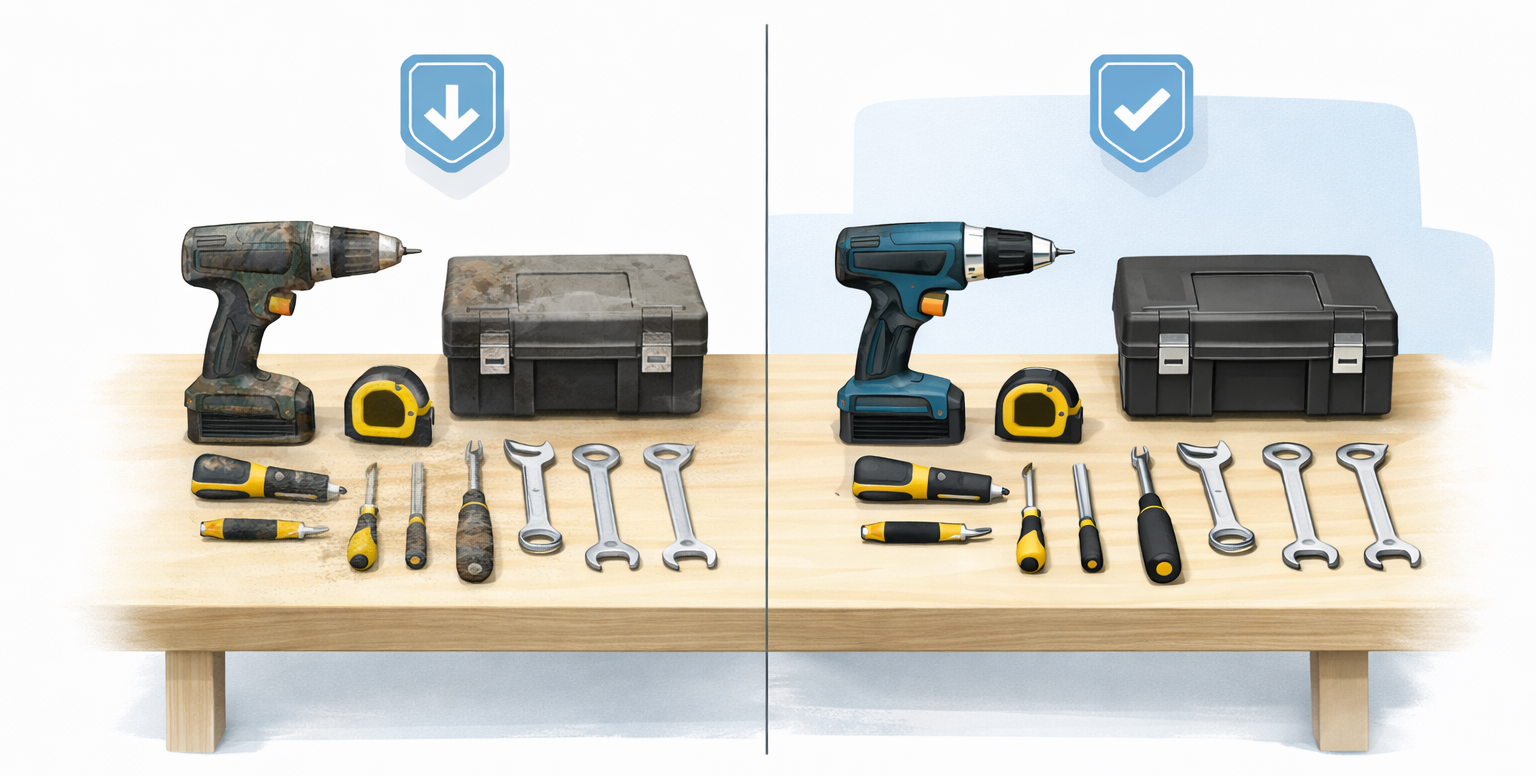
“Age does not matter, a drill is a drill”
As noted earlier, payouts almost always take tool age into account. You might only get a percentage of the original price, especially for older kit. That matters when you set the sum insured and think about how much it would cost to get back up and running.
How to check if your tools are really covered
A simple way to sanity check your own position is:
- Look at your schedule
a) Is there a clearly stated tools or “tools in transit” section?
b) What sum insured does it show?
- Read that section of the wording
Focus on:
- The definition of “tools” or “property insured”
- The security and overnight parking rules
- The claims limits and excesses
- Compare the sum insured with the real value of your kit
a) Add up roughly what it would cost to replace your main tools
b) Make sure your cover limit is in the same ballpark
- Check for gaps in where and when cover applies
a) Only in the UK, or wider?
b) Only when in the van, or also in lock-ups and on site?
If anything is unclear, it is usually worth asking an FCA authorised broker or the provider named on your documents to explain in plain English how tools are treated on your policy.
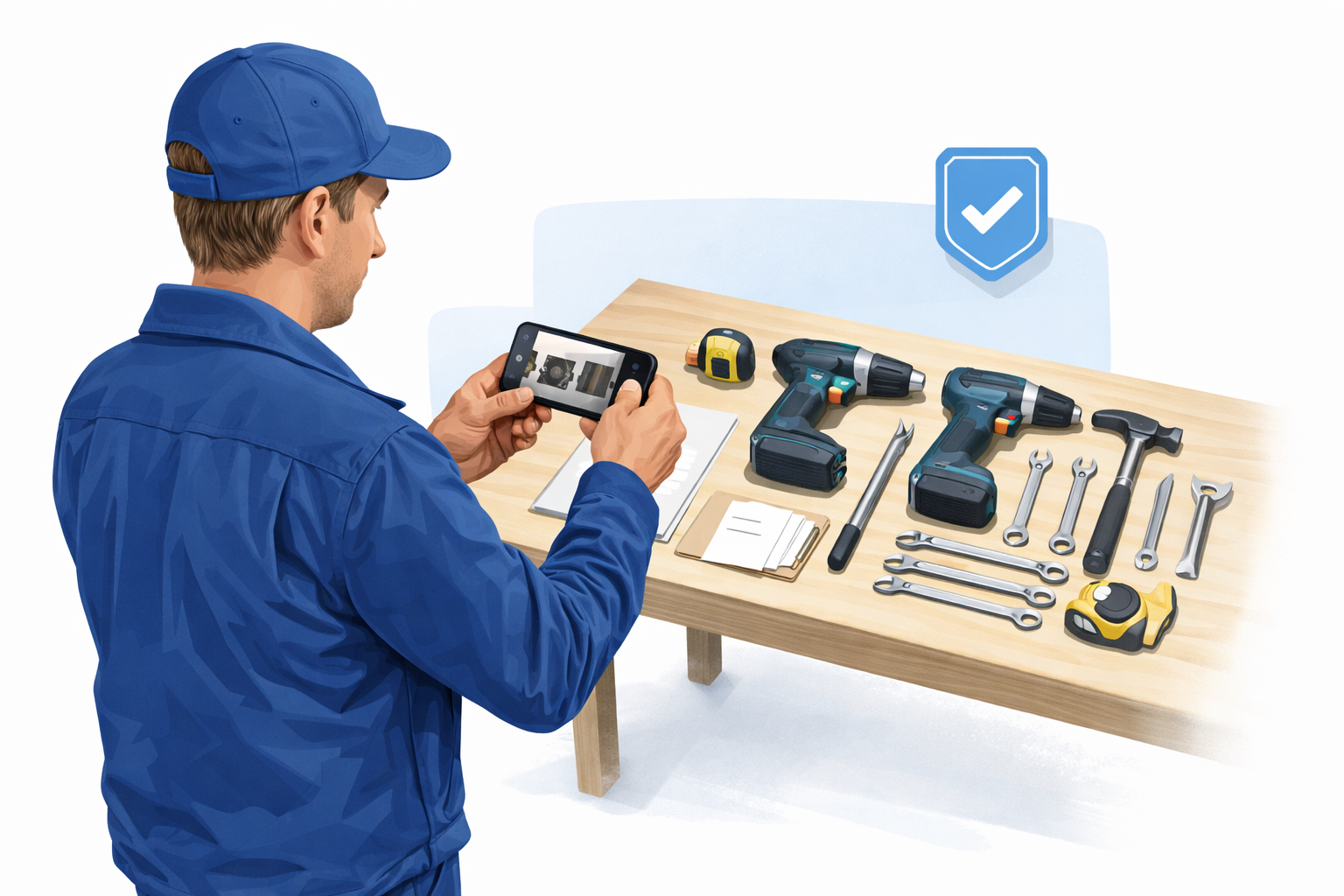
Tools cover on van insurance – FAQs
Is tools cover included as standard on van insurance?
Often it is not. Some comprehensive policies include a small amount of cover for items in the van, but many do not cover trade tools at all unless you add a tools or tools in transit section and set a sum insured.
Are my tools covered overnight in the van?
Sometimes, but only if you meet the policy’s security conditions. These can include where the van is parked, how it is locked, how tools are stored, and evidence of forced entry. If you cannot meet those conditions, the insurer may expect you to remove tools overnight.
Does tools cover pay “new for old”?
Usually not. Most tools cover pays based on the current value of the tool, often with a sliding reduction as items get older. You should not assume you will get the full original purchase price unless the wording clearly says so.
Do phones and laptops count as tools?
Not normally. Many tools sections specifically exclude laptops, mobiles and other personal electronics. If you need cover for those, you may need a different policy section or a separate gadget or business contents policy.
What proof do I need if my tools are stolen?
Insurers commonly ask for evidence of ownership, such as receipts, bank records, photographs or serial numbers, plus proof of forced entry where required. Without that, it can be harder to support a claim.
Next steps for van owners who carry tools
If you work with tools and rely on your van:
- Check your current policy for any tools or tools in transit section and sum insured
- Compare that limit with what it would really cost to replace your core kit
- Read the security and overnight rules to see if they match how you actually store your tools
- If you are not sure, ask an FCA authorised broker or your provider to explain how tools are treated on your policy
That way you are not left assuming your kit is protected, only to find out after a theft that the cover was never there in the first place.
VanCompare Editorial Team
The VanCompare Editorial Team produces clear, practical insurance guides for UK tradesmen, couriers, small business owners and other van drivers. We work with FCA regulated insurance brokers and providers to translate complex insurance topics into plain English and help drivers make informed decisions about their cover.
Where relevant, our content is checked against trusted UK sources such as the FCA, GOV.UK, the ABI and MoneyHelper to help keep it accurate and up to date. This content is for general information only and is not financial advice.