Speed Limit Guide for Vans With Windows in the UK
Vans with windows do not automatically get car speed limits. This guide explains when a van can legally do 70mph on a dual carriageway, how DVLA and vehicle type matter, and why getting it wrong can cost you.
Van Speed Limits, Dual Carriageways, and 70mph Rules Explained
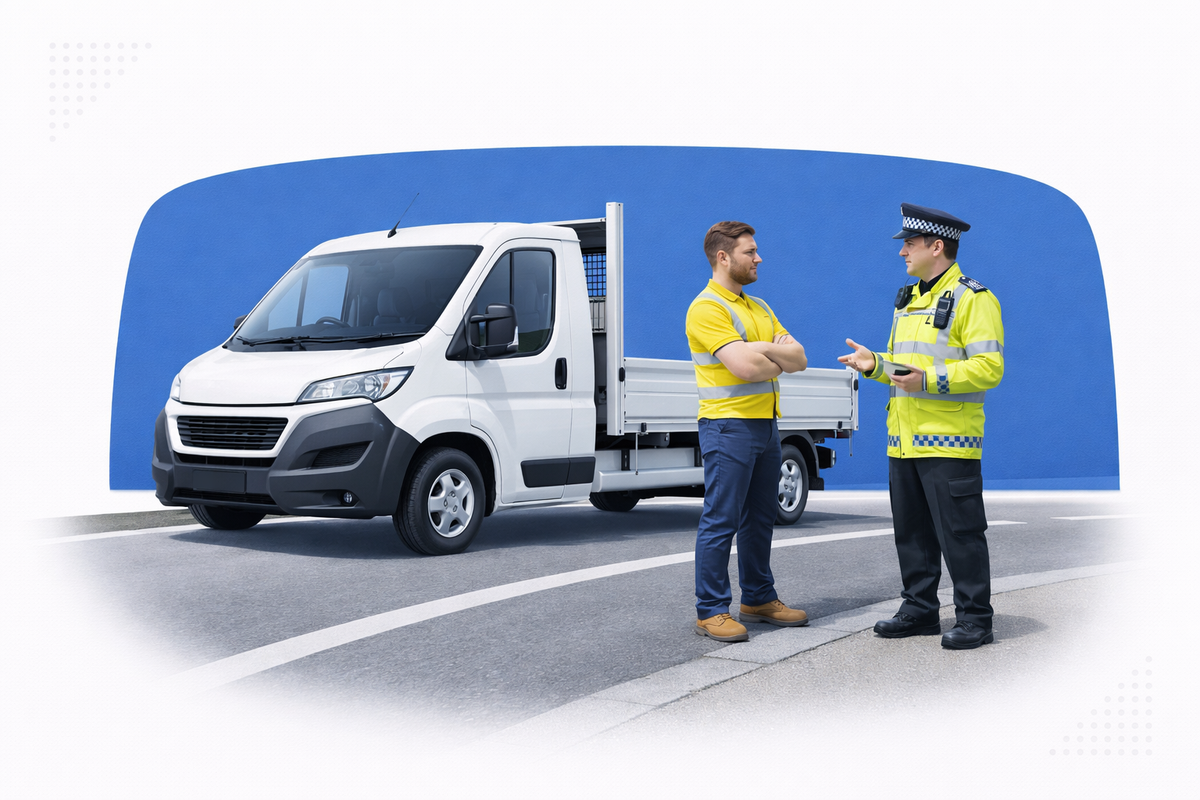
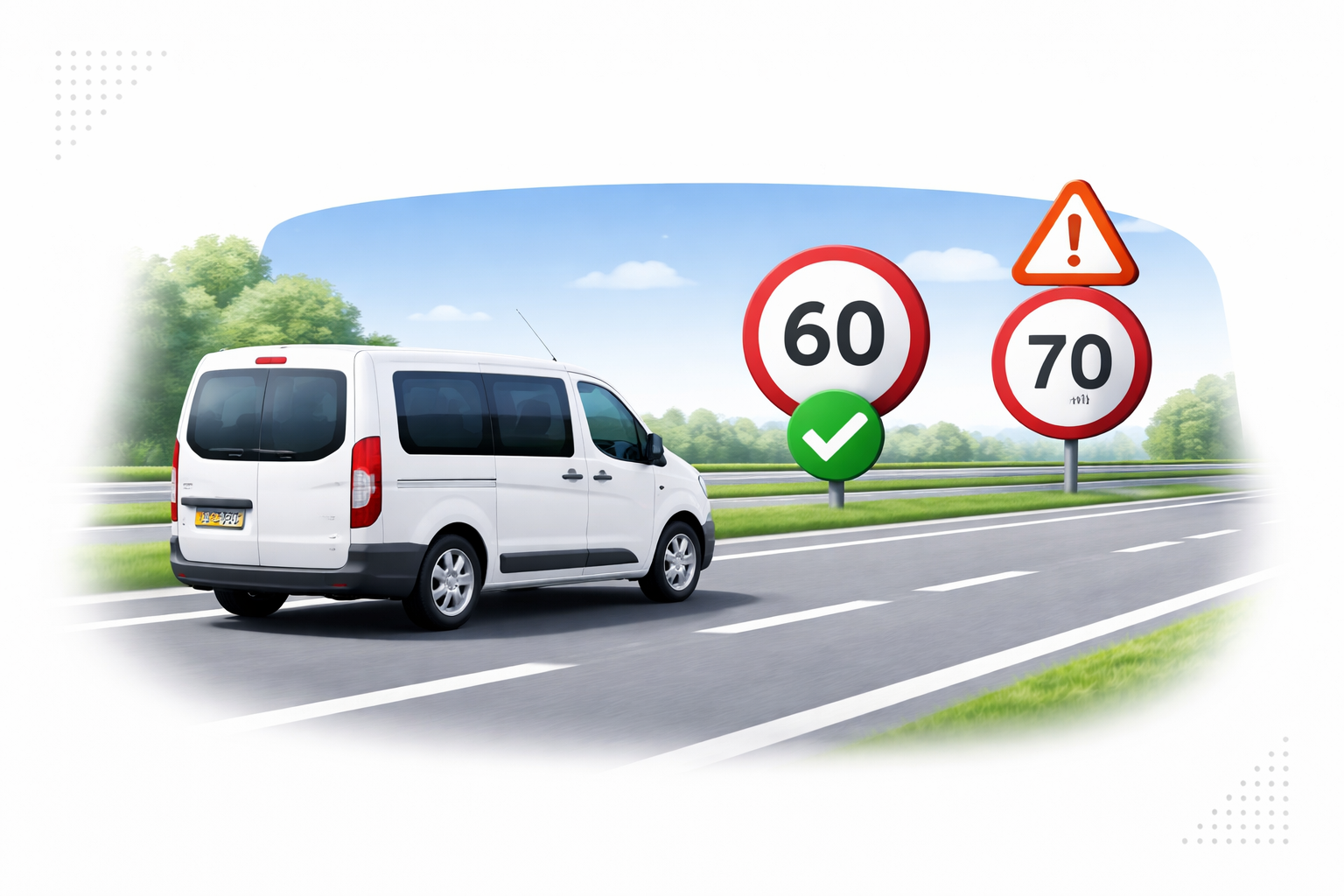
A van with windows does not automatically get car speed limits. In the UK, speed limits depend on the legal type of vehicle and, in some cases, its weight, not just how it looks. GOV.UK says standard vans have lower limits than cars and car-type vans, with most vans limited to 50mph on single carriageways, 60mph on dual carriageways, and 70mph on motorways.
That catches a lot of drivers out. A van can have side windows, rear seats or a more car-like layout and still be treated as a van for speed-limit purposes. Get it wrong and you can face fines, points and higher insurance costs. GOV.UK says speeding in a van can lead to 3 to 6 penalty points and fines of up to £1,000, or £2,500 on a motorway.
This guide explains when a van can follow car limits, when it cannot, and why “it has windows” is not the test you should rely on.
Why do van speed limits differ from car speed limits?
Because the law treats many vans as goods vehicles, not cars. GOV.UK’s speed-limit rules and Highway Code Rule 124 both separate cars and car-derived vans from goods vehicles not exceeding 7.5 tonnes. For most standard vans, the national limits are lower on single and dual carriageways than they are for cars.
The reason is practical as much as legal. Vans are often heavier, carry loads, and can take longer to stop. The law therefore applies different limits to different vehicle classes rather than treating every van-shaped vehicle the same.

Do windows change the speed limit for a van?
No, not by themselves. Adding windows does not automatically move a van into the same speed-limit category as a car. GOV.UK’s guidance for converted motor caravans is clear that body type recorded by DVLA is mainly for identification and appearance, and that body-type changes do not by themselves change legislative requirements such as speed limits.
What matters is whether the vehicle legally qualifies as something that follows car limits, such as a car-derived van or certain dual-purpose vehicles, or whether it remains a goods vehicle. GOV.UK says car-derived vans are the only light commercial goods vehicles that automatically get the same speed limits as cars; all other light commercial goods vehicles follow the lower goods-vehicle limits up to 7.5 tonnes.
So, windows are a clue to appearance, not a shortcut to the legal answer.
What speed limits apply to most vans in the UK?
For most goods vans not exceeding 7.5 tonnes maximum laden weight, the Highway Code table sets these limits:
- Built-up areas: 30mph in England, Scotland and Northern Ireland, and 20mph in Wales where that is the default limit
- Single carriageways: 50mph
- Dual carriageways: 60mph
- Motorways: 70mph, or 60mph if articulated or towing a trailer
GOV.UK’s separate “Driving a van” guide gives the same practical summary for standard vans: 30 / 50 / 60 / 70, and 30 / 50 / 60 / 60 for a van and trailer.
That means the national speed limit sign does not mean the same thing for every vehicle. For a typical van on a national-speed-limit single carriageway, the legal maximum is usually 50mph, not 60mph. On a national-speed-limit dual carriageway, it is usually 60mph, not 70mph.
When can a van do 70mph on a dual carriageway?
Only if it qualifies for car limits.
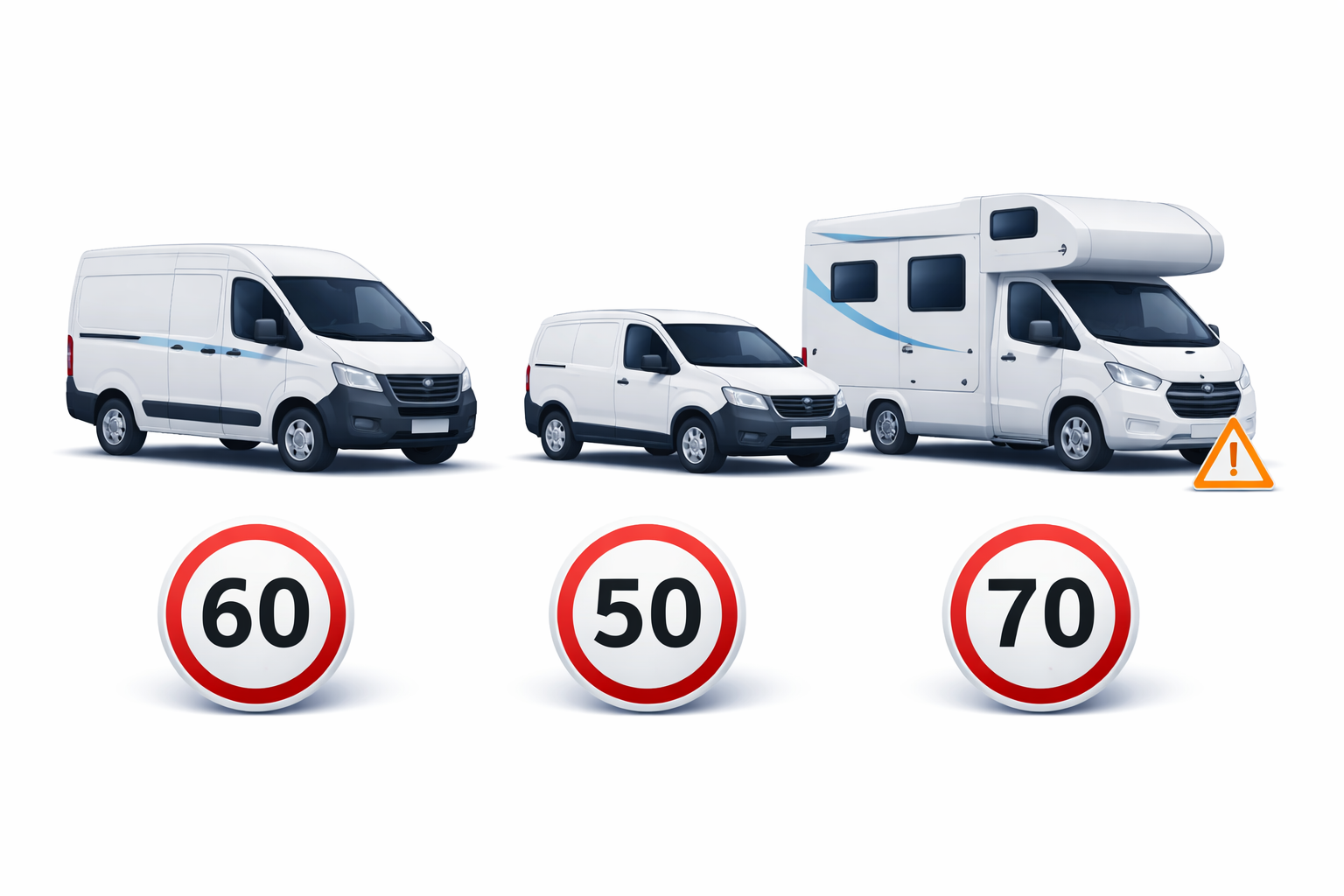
Under Highway Code Rule 124, cars and motorcycles, including car-derived vans up to 2 tonnes maximum laden weight, can do 70mph on dual carriageways. GOV.UK’s van guidance also says “car-type vans” can follow 30 / 60 / 70 / 70.
GOV.UK’s specific guidance on car-derived vans says they are the only light commercial goods vehicles that automatically get the same speed limits as a car. It also warns that if a vehicle is incorrectly registered as a car-derived van, you are not permitted to travel at national car limits and should follow the lower goods-vehicle limits instead.
So the answer is:
- Yes, a van can do 70mph on a dual carriageway if it is legally a car-derived van or other vehicle type that follows car limits.
- No, a normal goods van with side windows does not get 70mph on a dual carriageway just because it looks more car-like.
What about car-derived vans and dual-purpose vehicles?
This is where most of the confusion starts.
A car-derived van is not just any small van. GOV.UK’s guidance is quite strict: if a goods vehicle exceeds 2 tonnes maximum laden weight or does not otherwise meet the criteria, it should not be treated as a car-derived van for speed-limit purposes. Until it is correctly registered and it genuinely qualifies, GOV.UK says you must follow the lower limits for a goods vehicle.
A dual-purpose vehicle can also follow car limits, but that is a technical legal category, not simply “a van with windows.” If you are unsure whether your vehicle genuinely falls into that class, the safest approach is to assume the lower van limits until you have checked with the manufacturer, the dealer, or DVLA-supported documentation.
Do campervans and motor caravans follow car limits?
Sometimes, but weight matters.
Highway Code Rule 124 says:
- Motor caravans not exceeding 3.05 tonnes maximum unladen weight follow car limits: 60mph on single carriageways, 70mph on dual carriageways, 70mph on motorways.
- Motor caravans exceeding 3.05 tonnes maximum unladen weight follow lower limits on single and dual carriageways: 50mph and 60mph, though they can still do 70mph on motorways.
That means a converted van does not automatically get car limits just because it has windows or camping gear. The legal position depends on what the vehicle actually is and, for motor caravans, its unladen weight. GOV.UK also says that a body-type change on the V5C does not itself decide speed limits or insurance rules.
What if the van is electric?
The power source does not change the speed limit. GOV.UK’s speed-limit rules are based on vehicle type and weight, not whether the vehicle is petrol, diesel or electric. So an electric goods van follows the same class-based speed rules as an equivalent non-electric van.
What about towing?
If you tow a trailer, the position tightens.
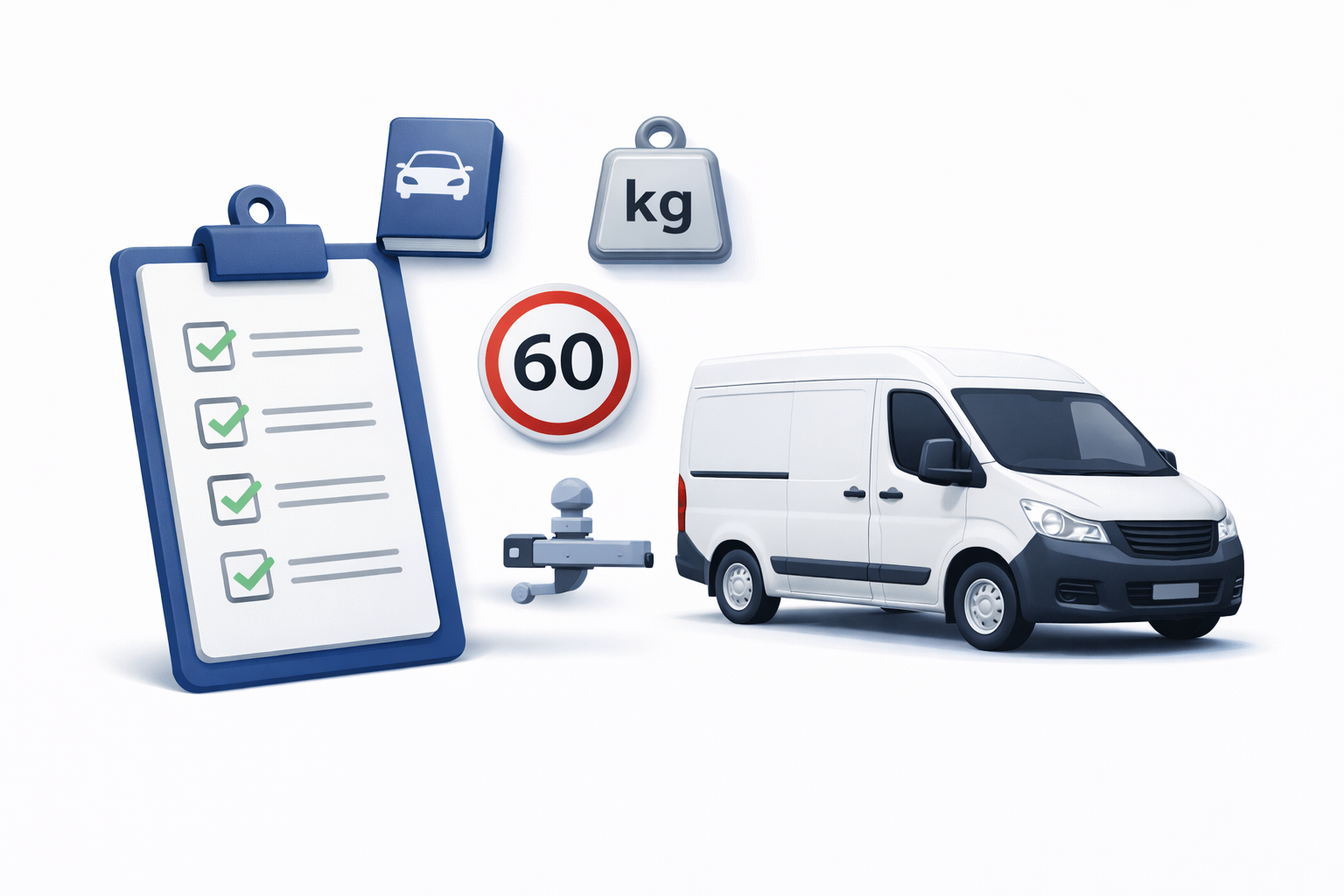
GOV.UK’s van guide says a van and trailer is limited to:
- 30mph in built-up areas
- 50mph on single carriageways
- 60mph on dual carriageways
- 60mph on motorways
That is one of the easiest ways for a driver to stray over the legal limit without realising it, especially on motorways where the natural assumption is still 70mph.
How can you check which limit applies to your van?
Start with the basics:
- Check the V5C and vehicle paperwork for body type and model details
- Check the manufacturer’s information if you think the vehicle may qualify as a car-derived van
- Check the VIN plate / weight details so you know whether weight changes the position
- If the van has been converted, do not assume the conversion changed the legal speed category
- If you are still unsure, follow the lower van limits until you get a firm answer
That cautious approach is usually the safest one for both compliance and insurance.
Why does this matter for van insurance?
Because speeding points can feed straight into your future premium.
GOV.UK says speeding in a van can mean 3 to 6 penalty points and substantial fines. A speeding offence can also make you look like a higher risk at renewal, especially if the offence is recent or if there are several points already on the licence.
If you use the van for work, the cost is often wider than the fine alone. There is the premium impact, the licence impact, and the operational hassle if you rely on the van every day.
Bottom line
A van with windows does not automatically follow car limits. In the UK, the legal speed limit depends on what the vehicle actually is in law, not how car-like it looks.
For most standard goods vans up to 7.5 tonnes, the key limits are still:
- 50mph on single carriageways
- 60mph on dual carriageways
- 70mph on motorways
If the vehicle genuinely qualifies as a car-derived van, or in some cases as another vehicle class that follows car rules, the limits can be different. If you are not sure, the safest move is to follow the lower van limits until you have checked properly.
FAQS
Do vans with windows follow car speed limits?
Not automatically. Windows alone do not change the legal speed limit. What matters is whether the vehicle genuinely qualifies as a car-derived van, dual-purpose vehicle or another category that follows car limits.
What is the speed limit for most vans on a dual carriageway?
For most standard goods vans not exceeding 7.5 tonnes maximum laden weight, the limit is 60mph on a dual carriageway.
Can a van legally do 70mph on a dual carriageway?
Yes, but only if it legally qualifies for car limits, such as a car-derived van. A standard goods van with side windows does not get 70mph on a dual carriageway just because it looks more car-like.
Do electric vans have different speed limits?
No. The legal speed limit depends on vehicle type and weight, not on whether the van is petrol, diesel or electric.
Does adding windows turn a panel van into a motor caravan for speed-limit purposes?
No. Windows alone do not do that. A conversion does not automatically change the legal speed category, and body-type changes on the V5C do not by themselves decide speed limits.
VanCompare Editorial Team
The VanCompare Editorial Team produces clear, practical insurance guides for UK tradesmen, couriers and small business owners. We work with FCA authorised insurance brokers and use insurer information where relevant to explain insurance topics in plain English and help drivers make informed decisions about cover.
Where relevant, our content is checked against publicly available UK guidance and information from sources such as the FCA and GOV.UK to help keep it accurate and up to date.
This content is for general information only and is not financial advice.