Motoring convictions and the Highway Code: what van drivers need to know in 2026
Phone rules, van speed limits and safe passing guidance now make it easier for van drivers to pick up points. This article links key Highway Code rules to how convictions can change your van insurance costs.
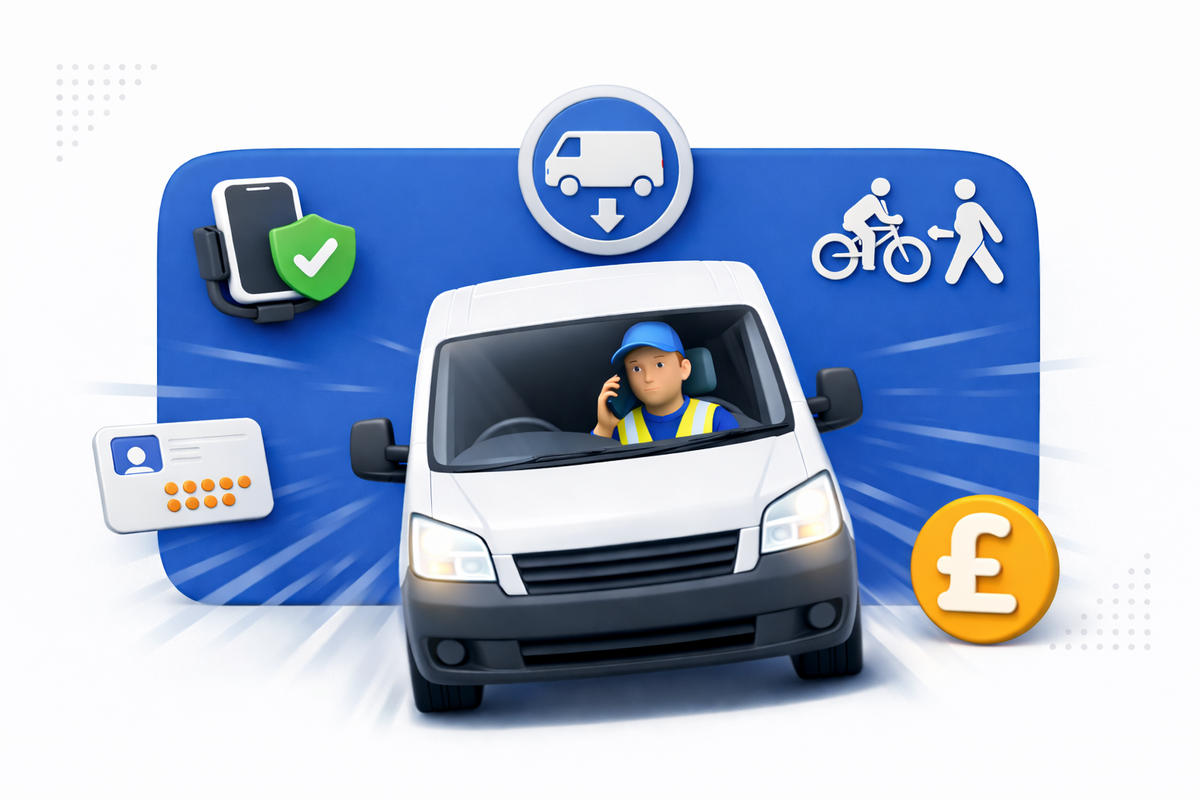
For van drivers, points on a licence do more than annoy the DVLA. They feed straight into van insurance pricing, eligibility, and sometimes whether an insurer will quote at all.
Recent rule changes on phones, how you pass people on bikes or on foot, and how vans are treated for speed limits mean it is now easier to pick up 6+ points in one hit. This guide focuses on:
- Phone use while driving
- Passing cyclists and pedestrians
- Van-specific speed limits
- How these offences tend to affect van insurance
This is a general overview only, not legal advice. Always check GOV.UK and the Highway Code for the latest rules.

Phone use: why one mistake can mean 6 points
What changed
The rules on using a phone while driving have tightened. It is now an offence to use a hand-held phone for almost any purpose while at the wheel, not just “interactive communication”.
That includes things like:
- Checking or unlocking the screen
- Scrolling music or apps
- Taking photos or video
- Playing games
- Any text or messaging use
You do not have to be moving. Being stopped in traffic with the engine on still counts as “driving” for these rules.
There are very limited exceptions, such as genuine emergency calls to 999 or 112 when it is unsafe or impractical to stop.
Typical penalties
For most drivers, including van drivers, the starting point is:
- 6 penalty points
- A fixed fine (often £200 if dealt with by fixed penalty)
For someone who drives for work, that can be enough on its own to:
- Push total points into the range where disqualification becomes a risk
- Trigger stricter views from insurers at renewal
How phone convictions hit van insurance
Insurers treat phone offences as a sign of higher risk, not a minor admin slip. In practice, that can mean:
- Some mainstream insurers will not quote at all if there is a recent hand-held phone offence
- Others quote, but with higher premiums and sometimes higher excesses
- For drivers with other history (claims, speeding, previous bans), a fresh phone offence can push them into “high risk” schemes only
From a van insurance point of view, a recent phone conviction is often in the same bucket as higher-end speeding or careless driving, not a small parking ticket.

Passing cyclists and pedestrians: the “hierarchy of road users”
The hierarchy idea
The Highway Code set out a clearer “hierarchy of road users”. In short:
- Those who can cause more harm in a collision (vans, cars, HGVs) have a higher level of responsibility to reduce danger to those who are more exposed (people on bikes, horses, pedestrians).
That does not mean other road users have no duties, but it does mean van drivers are expected to take more care around people who would come off worse in a crash.
Safe passing distances
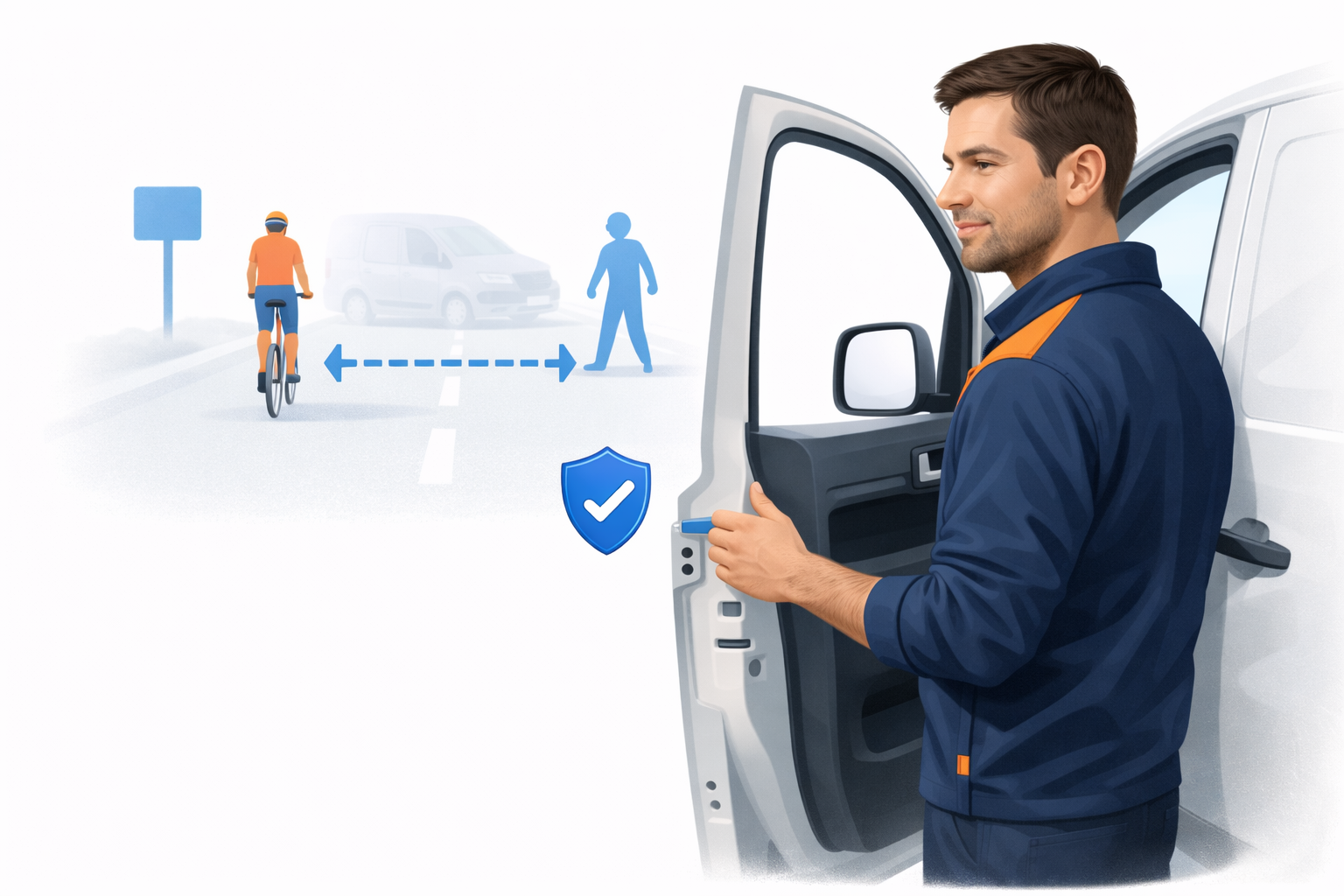
The Code gives clear guidance on passing people on bikes and on foot. Examples include:
- Leaving at least 1.5 metres when passing cyclists at speeds up to 30 mph, and more space at higher speeds
- Giving extra room in bad weather or with larger vehicles
- Taking particular care around pedestrians crossing side roads, junctions, or walking in the road where there is no pavement
Close passes, cutting across at junctions, or turning without checking properly can all lead to a finding of fault if there is a collision or near miss.
Why this matters for van drivers and claims
If there is an incident with a pedestrian or cyclist, the hierarchy and passing guidance can:
- Influence how fault is judged
- Affect how claims are settled
- Shape how serious any resulting motoring conviction is
From an insurance angle, a collision with a vulnerable road user can:
- Sit on your claims record as a significant at-fault loss
- Sometimes come with a conviction such as careless or dangerous driving
- Lead to premium increases or insurer refusals at renewal
Even without a conviction, a serious at-fault claim involving injury tends to move a van driver into a higher risk category.
Van-specific speed limits: an easy way to collect points
Vans often have lower limits than cars
A common misunderstanding is that a van can follow the same speed limits as a car in all cases. In the UK, many vans have lower speed limits than cars on certain roads, such as:
- Single carriageways
- Dual carriageways
The exact limit depends on the vehicle type and weight. Some car-derived vans follow car limits, but many panel vans and larger vehicles do not.
If you drive a van and follow the same speeds you would in a car, you can:
- Be recorded over the limit for your vehicle even if you match the posted sign
- End up with speeding points you did not expect
For more information on these limits, see the official speed limit rules.

How this feeds into convictions
Speeding penalties depend on:
- How far over the limit you were for your vehicle
- The type of road
- Previous history
For van drivers, repeated speeding, or being far over the correct van limit, can:
- Build points quickly
- Lead to short-term disqualifications
- Push insurers to see you as a higher risk, especially if offences are recent or repeated
What these offences do to van insurance pricing
Insurers do not all treat every conviction the same way, but some broad patterns are common.
Phone use: high impact, long memory
A recent hand-held phone conviction:
- Can restrict which insurers are willing to quote
- Often leads to a noticeable premium increase
- May mean higher excesses or tighter terms
For drivers who already have points or claims, it can be the point where more standard insurers step away and specialist “high risk” markets come into play.
Speeding: volume and severity both matter
One minor speeding offence a few years ago is usually treated more lightly than:
- Several speeding convictions close together
- One offence at a very high speed above the correct van limit
- Speeding combined with an at-fault collision
Insurers look at both the number of offences and how recent they are. A cluster of recent speeding points can move a van driver into a more expensive bracket, especially if they use the van for work every day.
Offences involving other road users
Convictions linked to collisions with cyclists or pedestrians, or to careless or dangerous driving, can:
- Have a strong effect on how underwriters see the risk
- Sometimes reduce the number of markets willing to quote
- Sit alongside at-fault claims in your record, increasing pricing pressure
Even where there is no formal conviction, a serious fault claim involving injury can still drive prices up, especially where personal injury costs are paid, increasing the total payout.
How van drivers can reduce risk and protect their record
You cannot control every factor on the road, but there are some practical steps that can help.
Treat phone use as “engine off only”
Simple habits that can reduce the risk of a 6-point offence:
- Put the phone out of reach unless it is in a legal cradle and set up before you move
- Use hands-free in line with the rules, but still stay aware that you must remain in control at all times
- Only handle the phone when parked safely with the engine off
The goal is to remove temptation during the types of short stop where people most often “just check something quickly”.

Build in time for lower limits and safe passing
For regular van routes:
- Learn which stretches have lower limits for your vehicle type
- Allow enough time so you do not feel pressure to push the pace
- Take passing distances seriously, especially in built-up areas or near schools and work sites
Small changes in planning can cut the risk of both convictions and claims.
Be open with insurers and brokers
If you do pick up points:
- Declare them accurately when asked
- Be clear about dates and offence codes
- Use a broker if your record is becoming complex, as they can help find insurers who are more comfortable with that pattern of risk
Not declaring convictions properly can cause bigger problems later if there is a claim and checks show missing information.
FAQs: motoring convictions, the Highway Code and van insurance
Do motoring convictions always increase van insurance?
Not always, but many do. Minor, older offences may have a smaller impact than recent ones linked to higher risk behaviour, such as hand-held phone use or high-speed offences. Insurers look at the full pattern, not just a single code in isolation.
Does a phone conviction affect van insurance more than a normal speeding ticket?
Often yes. Using a hand-held phone while driving is seen as a serious distraction risk, and it usually brings 6 points in one go. Many underwriters treat this as a higher concern than a small, older speeding offence.
Can I ignore van-specific limits if the sign says 60 or 70 mph?
No. Posted limits set the maximum for standard cars and motorcycles. Many vans have lower legal limits on some roads. If you drive at the car limit in a van that should be going slower, you can still be over the limit for your vehicle.
Will a single conviction stop me getting van insurance?
In most cases, a single minor conviction will not stop you getting cover, but it may reduce the number of insurers willing to quote or increase the price. More serious or repeated offences can make it harder, which is where a broker can often help.
How long do motoring convictions affect my van insurance?
Insurers can look at several years of driving history when pricing policies. The exact period they consider can vary, but recent offences are usually treated as more important than older ones. Check with your broker or provider to see what history they ask for.
Next steps for van drivers
If you rely on a van for work, it is worth:
- Checking the current Highway Code guidance on phones, passing distances and speed limits for your vehicle
- Reviewing your own driving habits around phone use, time pressure and regular routes
- Making sure any convictions or points are declared accurately when you get quotes
Staying on top of both the rules and how they link to insurance can help keep your record cleaner and your long-term costs under better control.
VanCompare Editorial Team
The VanCompare Editorial Team produces clear, practical guides for UK tradesmen, couriers, small business owners and other van drivers. We work with FCA authorised insurance brokers and use UK public guidance where relevant to explain insurance topics in plain English and help drivers make informed decisions about their cover.
Where appropriate, our content is checked against trusted UK sources such as GOV.UK and the Highway Code to help keep it accurate and up to date. This article is for general information only and is not legal or financial advice.