Where to get van insurance quotes in the UK: comparison sites, brokers and direct insurers compared
Not sure where to get van insurance quotes in the UK? Compare comparison sites, brokers and direct insurers, plus the checks that stop wrong cover.
If you just need a quote today, there are three routes that cover almost everyone in the UK:
- Comparison sites
- Brokers
- Direct insurers (going to one insurer yourself)
None is always best. The right route depends on what you use the van for, how standard your risk is, and how much you want help if things get messy.
If you want a simple answer to “where can I get van insurance quotes in the UK?”, try a comparison site first. VanCompare.com is a van-focused option, and other mainstream comparison sites include Confused.com, MoneySuperMarket, GoCompare and Compare the Market. Because pricing and terms can vary by panel and by how use is captured, it is sensible to compare carefully rather than pick the first cheap result.
This guide gives you a quick way to choose, then shows you how to compare quotes properly so you do not buy the wrong class of use or miss a condition that bites later.
If you are ready to price it now, start here.

The quick answer - best route by driver type
If you are a tradesman carrying tools
Start with a comparison site for speed, then double check any tool cover and security conditions before you buy. If you carry expensive tools, have racking, signwriting, a roof rack, or you park on the street, it can be worth speaking to a broker to avoid nasty surprises on exclusions and conditions.
Useful reads:
- Car vs Van Insurance: Key Differences Explained
- Tool Theft in the UK: Why Vans Are Being Targeted and How to Protect Your Livelihood
If you are a courier or delivery driver
You will need to select the right class of use (often hire and reward, or haulage). Lots of people fall into the trap of getting a cheap quote for the wrong use, then finding out it does not cover their work if there is a claim.
If you are delivering for payment, start by getting clear on your use, then compare. This is the one area where a broker can save you time because they can sanity check what you actually do.
Start points:
If you are under 25 or newly self-employed
Use comparison sites to price shop, but be ready to test a few variations (within reason) like voluntary excess, mileage, and where you park. The big win is accuracy and consistency - if you change your story between quote runs, you can make it harder to compare and easier to accidentally misstate something.
You may also want to speak to a broker if you have convictions, a recent claim, or a van that is not standard.
If you run 3-10 vans
You are usually comparing:
- individual policies for each van, vs
- a fleet policy
A broker is often the fastest way to get to a sensible answer here, because fleet rating depends on driver set-up, claims history, and how you manage the vans day to day. You can still use comparison sites to get a rough benchmark, but you will normally end up on broker-led markets for anything beyond very simple fleets.
Your three main options for van insurance quotes
1) Comparison sites
Comparison sites are the quickest way to see a spread of prices from multiple insurers for broadly standard risks. You answer one set of questions and get a list of quotes to compare.
If you want a van-focused comparison route, VanCompare.com is one place to start. Other well-known UK comparison sites include Confused.com, MoneySuperMarket, GoCompare and Compare the Market.
Pros:
- Fast - good when you need a quote the same day
- Easy to price shop across several insurers
- Useful for simple trades use, one van, one main driver
Cons:
- Can be easy to pick the wrong class of use if you are not sure
- Important details can be buried in the policy documents
- Not every insurer or specialist scheme will appear
- Some risks do not fit neatly (heavy modifications, unusual use, poor claims history)
When it is best:
- One van
- Clear use (social, commuting, own goods)
- You are happy to check the policy details and add-ons properly before you buy
If that sounds like you, this is usually the best first stop: compare van insurance uk page.
2) Brokers
A broker is a person (or a team) who helps you place cover with insurers. Some brokers use the same insurer panels you see on comparison sites, some have extra markets, and some run specialist schemes for certain trades and uses.
Pros:
- You can explain your situation in plain English, then they help match cover to it
- Good for couriers, modified vans, high value tools, and anything that needs careful wording
- Support when you are changing something mid-policy, or if there is a claim
Cons:
- You might not see a big list of instant prices on a screen
- It can take longer, especially if the insurer needs more detail
- Some brokers charge fees (this varies, and should be disclosed clearly)
When it is best:
- Courier work, multi-drop, or any doubt about hire and reward
- Expensive tools, racking, roof rack, signwriting, non-standard van
- You have had cancellations, claims, or convictions and want the cover checked
- you are continually getting expensive quotes via alternate means.
A good broker will still compare the market, with some even have access to specialist non-standard insurers to do not appear on comparison sites. The difference is they should help you get the questions right and avoid buying cover that does not match your real use.
3) Direct insurers
This is where you go straight to one insurer for a quote, either online or over the phone.
Pros:
- Simple if you already know the insurer you want
- Sometimes a direct deal is competitive
- Can be good for renewals if you are happy and nothing has changed
Cons:
- You are only seeing one price and one set of terms
- If you do not know what you do not know, it is easier to miss details
- It can be slower to compare properly unless you are very organised
When it is best:
- You have found a good insurer before and your situation is still standard
- You want a specific feature you know they offer
- You are using direct quotes as a check against comparison site results

Comparison table - who each route suits
Here is a simple way to choose.
|
Route |
Best
for |
Speed |
Price
shopping |
Specialist
needs |
Help
if things get tricky |
|
Comparison sites |
Standard risks, one van, clear use |
High |
High |
Medium |
Low to medium |
|
Brokers |
Anything complex or unclear |
Medium |
Medium to high |
High |
High |
|
Direct insurers |
If you know exactly what you want |
Medium |
Low |
Low to medium |
Medium |
Most people should start with a comparison run to get a baseline, then use a broker or direct quote to sanity check if they have anything unusual going on.
What you need to get a useful quote (and what trips people up)
If you only take one thing from this article, take this: the cheapest quote is pointless if it is based on the wrong use or missing a key detail.
Class of use - the biggest pricing swing
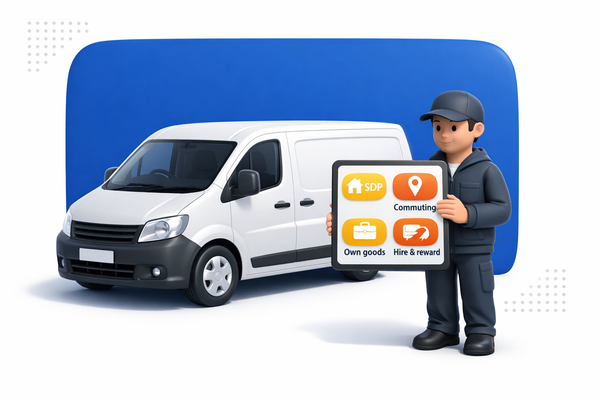
Van insurance pricing changes a lot based on how you use the vehicle. Common categories include:
- Social only (personal errands)
- Social and commuting
- Business use (carrying your own tools or goods)
- Hire and reward (carrying other people’s goods for payment, delivery work)
If you do deliveries for money, do not guess. Get the use right first, then compare.
Related guide:
Tools, racking, signwriting, roof racks and modifications
Trades vans are often not “standard”. Common things you should disclose when asked include:
- racking and shelving
- roof rack or ladder rack
- tow bar
- signwriting
- any performance changes (even if you think they are minor)
Different insurers treat this differently. Some are relaxed, some are strict, and some want extra detail. If your van is heavily kitted out, a broker can help avoid guesswork.
Where you park and overnight security
Where the van lives overnight can move price a lot.
Be accurate about:
- driveway vs road vs car park
- postcode where it is kept overnight most of the time
- alarms, immobilisers, trackers (only if you actually have them)
If you are adding tool cover, pay attention to security conditions such as lock types, forcing entry requirements, or where tools must be stored overnight.
Claims and convictions - timing and accuracy
Insurers do not all treat the same events the same way, but they do care about honesty and consistency. If you have:
- recent claims
- motoring convictions
- a previous policy cancelled or voided
…be straight and keep your answers consistent between quote runs.
If you are not sure what counts, a broker is often the quickest way to stop you accidentally getting it wrong.
Annual mileage and radius of work
If you are a tradesman who works locally most weeks but does the occasional longer job, be realistic. Understating mileage just to chase a lower price can backfire later. Your goal is “right and defendable”, not “perfect”.
How to compare quotes properly (not just the cheapest headline price)
After you get a list of prices, do a second pass on the parts that actually matter.
Excesses and hidden costs
Check:
- compulsory excess
- voluntary excess
- total excess for common claim types (windscreen, theft, accidental damage)
A cheaper policy with a chunky excess can be false economy if you are the type of driver who might claim for a scrape or windscreen.
Courtesy van and hire vehicle cover
If the van is your livelihood, being off the road hurts.
Look for:
- whether a courtesy van is included
- whether it is only through an approved repairer
- how long it is provided for
- any limits that make it useless for work (size, use, payload)
If this matters to you, also read:
Tools and goods cover - limits and conditions
Two common misunderstandings:
- Tools cover is not always included, and when it is, the limit can be low.
- Goods in transit cover is different from tools cover, and is often more relevant for couriers.
If you carry tools daily, check:
- the limit
- whether tools must be locked away or removed overnight
- whether theft must involve forced entry
- whether high value items need to be declared
If you deliver goods, check:
- what counts as “goods”
- whether it covers theft from the vehicle
- whether it covers damage in transit
Guide: Hire & Reward vs Goods in Transit: What is the Difference?
When a broker is worth it (real examples)
Here are two normal cases where a broker can earn their keep.
Example 1: courier work with mixed use
You are a self-employed tradesman most days, but you do multi-drop deliveries on weekends for extra income.
The risk:
- You buy business use for “own goods”, but your weekend delivery work is classed differently.
A broker can help you define your use properly, so you are not paying for the wrong thing or left exposed.
Example 2: tradesman van with heavy kit
You have racking, a roof rack, signwriting, and you keep several thousand pounds of tools in the van.
The risk:
- You assume the policy includes tools cover, or you do not notice strict overnight storage conditions.
A broker can guide you to insurers that are sensible on modified vans and can highlight tool cover conditions before you buy.
Common traps when getting van insurance quotes online
- Choosing the wrong class of use because the wording sounds similar
- Forgetting to declare modifications (even “normal” trade ones like racking)
- Comparing prices while the cover levels are not like-for-like
- Assuming tools are covered as standard
- Not checking courtesy van terms until after a claim
- Letting the cheapest quote win without reading the key facts
If you are in doubt, slow down and check the details, or speak to a broker for five minutes. That can save you weeks of pain later.

Next steps - get quotes the smart way
- Get clear on your use (especially if you do deliveries for payment).
- Run a baseline comparison so you can see the market.
- Shortlist 2-3 options and compare the details, not just the price.
- If anything about your set-up is non-standard, speak to a broker to sanity check the cover.
Ready to compare? Start here:
FAQs
Do comparison sites cover courier van insurance?
They can, but it depends on the insurer and how clearly the questions separate standard business use from delivery work. If you do deliveries for payment, make sure the quote reflects that.
Is it cheaper to go direct for van insurance?
Sometimes, but direct only shows you one price and terms. The best way to know is to compare, then use a direct quote as a cross-check.
Should I use a broker for van insurance?
If your use is unusual (courier work), your van is modified, you carry expensive tools, or you have a complex history, a broker can help you place the right cover and avoid mistakes.
What information do I need to get a van insurance quote?
Typically: van details, where it is kept overnight, annual mileage, main driver details, use type, any modifications, and recent claims or convictions.
What is the biggest mistake people make when getting van insurance quotes?
Buying a policy based on the wrong class of use, especially when they do deliveries or paid transport work on the side.
If I carry tools, are they insured on my van policy?
Not always. Some policies include a small amount, others do not include tools at all, and many have conditions and limits. Always check the limit and the security requirements.
VanCompare Editorial Team
The VanCompare Editorial Team produces clear, practical insurance guides for UK tradesmen, couriers and small business owners. We work with FCA authorised insurance brokers and use insurer information where relevant to explain insurance topics in plain English and help drivers make informed decisions about cover.
Where relevant, our content is checked against publicly available UK guidance and information from sources such as the FCA and GOV.UK to help keep it accurate and up to date.
This content is for general information only and is not financial advice.
Ownership disclosure:
This article is published by VanCompare.com. Any references to VanCompare are included to explain one route to market for getting quotes, alongside brokers and direct insurers.