Classes of use for van insurance explained: social, commuting, own goods and hire & reward
Choosing the right class of use is one of the most important parts of setting up van insurance. This guide explains social use, commuting, carriage of own goods and hire & reward in plain English, with examples for tradesmen and small business owners.
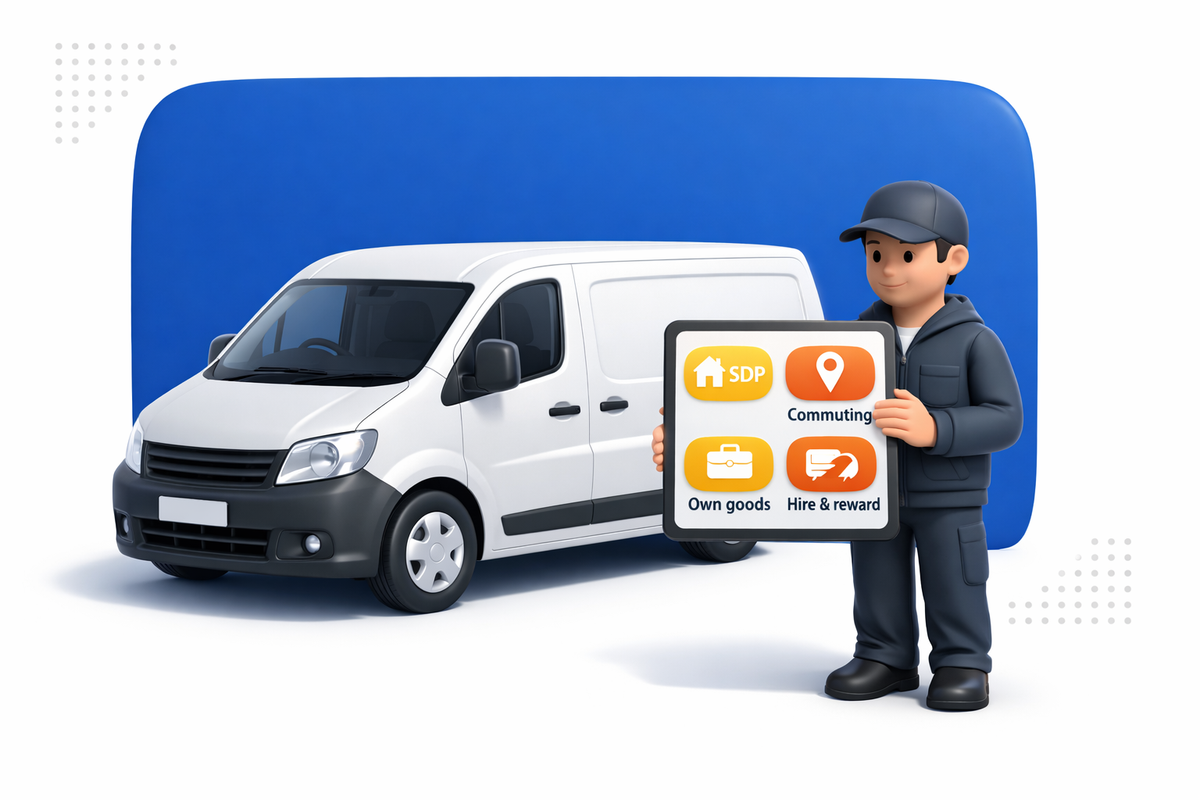
When you get a van insurance quote, the “class of use” box can feel like a formality.
In reality it does a lot of heavy lifting. It tells the insurer what you actually do with the van, shapes which underwriters will quote, and is one of the first things people look at if a serious claim ever gets checked.
This guide explains the main van classes of use in the UK in plain English, then looks at the grey areas that catch tradesmen and small firms out.

What “class of use” actually covers
Class of use is about how the van is used day to day, not how well it is insured.
It answers simple questions:
- Are you just using it for personal life
- Are you driving to a single place of work
- Are you using it to run your own trade or business
- Are you being paid mainly to move other people’s goods
You still choose your cover level on top of this:
- Third party only
- Third party, fire and theft
- Comprehensive
The class of use just tells the insurer what kind of work sits behind that cover.
The main classes of use for vans
For vans, you will normally see four core descriptions:
- Social, domestic and pleasure
- Social, domestic, pleasure and commuting
- Carriage of own goods for work
- Hire and reward / haulage
Different insurers phrase them slightly differently, but these are the ideas they are getting at.
Social, domestic and pleasure (SDP)
Social, domestic and pleasure is the base level.
It usually covers:
- Day to day personal use
- Trips to the shops
- Visiting friends and family
- Weekend driving and holidays
Under SDP only:
- You are not covered to use the van for any trade or business.
- Driving to and from work is usually not included unless commuting is added.
- Tools, stock and other items used to earn income are not what the policy expects to see in the back and may cause issues come claim time if present.
This might fit where:
- The van is really a family vehicle with extra space.
- You have a separate work vehicle and never use this one to earn money.
For most tradesmen and self employed people who keep their gear in the van, SDP by itself is usually not enough.
Social, domestic, pleasure and commuting
The next step is SDP with commuting.
This usually covers:
- All the social use above, plus
- Travel between home and one fixed, regular place of work
Key points:
- The workplace is meant to stay the same for the life of the policy.
- The setup assumes straightforward home to work and back, not a changing list of sites.
- The cover is not designed around carrying tools, materials or other business goods you use to earn income.
This can work for people like:
- A nurse driving to the same hospital
- A teacher driving to the same school
- A director driving to a single office and not using the van to visit customers or sites
Even in those cases, once you start using the van as part of wider business activity, such as attending client meetings or lugging work kit between locations, insurers are more likely to view that as business use rather than simple commuting.
A tradesman taking tools and materials from home to a yard or site most days will usually be better described as carriage of own goods, even if the destination stays the same.
Carriage of own goods for work
For many trades and small firms, this is the core working class of use.
Carriage of own goods generally means:
- You use the van for your own trade or business, and
- You carry tools, equipment, materials or stock that belong to you or your firm, and
- You are not paid mainly to move goods that belong to other people
Examples that usually fit own goods:
- A plumber carrying tools and pipework to customer homes
- A builder taking sand, cement and gear from the yard to different sites
- A shop owner moving stock between the shop and a small storage unit
- A director moving the company’s own equipment between offices or clients
Typical features:
- The van and the load are part of how you earn money.
- The jobs are centred around the work you do, not the act of delivering goods as a standalone service.
If you start doing work where the main service is moving other people’s goods from A to B, that is where hire and reward / haulage comes in.
Hire and reward / haulage
Hire and reward, sometimes called haulage, is where you are paid mainly to move goods that belong to someone else.
Common patterns:
- Multi drop parcel work
- Same day courier runs
- Regular delivery routes for other businesses
- Hot food delivery using a van rather than a car
Passenger work like taxi or private hire also sits under hire and reward, but this guide focuses on vans carrying goods.
Insurers often treat hire and reward as a higher risk because:
- There is more time on the road.
- There are more start stop trips, often in busy areas.
- The load can be valuable or attractive to thieves.
- Timed deliveries can push drivers into tighter schedules.
A key point that often surprises people:
- If any part of what you do is hire and reward type work, many insurers will expect the policy to be set up on that basis, even if it is only a small slice of your week.
- A hire and reward class can usually cover your own goods use as well. The higher risk use tends to set the tone.
Trying to keep a policy on an own goods or commuting basis while doing regular paid deliveries is exactly the kind of mismatch that can cause problems if a claim is ever checked.
Mixed patterns and tricky situations
Real life does not always fit the neat label on the quote screen. A few patterns come up again and again.
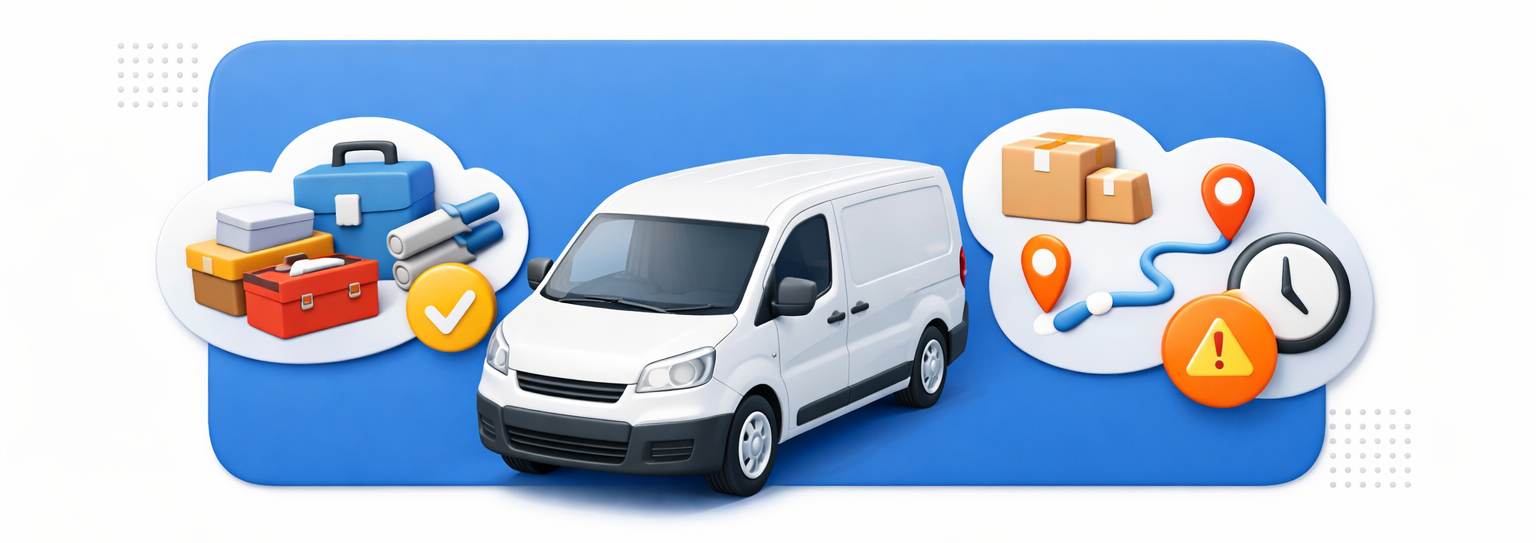
Trade work plus side courier jobs
Example:
- You are a self employed tradesman most of the week.
- At weekends you do parcel drops or similar for extra money.
Even if the courier work is only a small part of what you earn, being paid mainly to move other people’s goods is still hire and reward use.
In practice:
- Most insurers will want that disclosed.
- Many will insist on a hire and reward class if that type of work happens at all.
- The hire and reward setup then covers your own goods work as well.
The fact it is “only a bit of extra work” does not stop it being a different class.
Shop owners who deliver
Example:
- You run a shop and use the van to deliver goods to customers’ homes.
- You either charge a delivery fee or delivery is clearly part of what the customer is paying for.
That starts to look less like simple own goods and more like moving goods for others as part of the service.
Some insurers will treat this as hire and reward type work or will want very clear information so they can set up something that reflects both sides.
If you are unsure how far your deliveries push you towards hire and reward, it is safer to explain the setup to a broker than to assume it fits own goods.
Waste carriers and transfer notes
Waste work has its own twist.
If:
- You hold the right waste carrier licence, and
- You use transfer notes that move ownership of the waste from the customer to you at collection, and
- That is how you handle all your jobs
some insurers may treat that as carriage of your own goods, because once collected the waste belongs to your business.
If:
- There are no transfer notes, or
- Ownership of the waste stays with the customer while you move it
then haulage or hire and reward is usually a closer match.
This is a specialist area and worth spelling out in detail when you get quotes.
Helping other businesses, friends or family
This is where the “but it was only now and then” argument often appears.
For insurers, the key point is usually whether the use is transactional, not just how often it happens.
- If you are paid, or effectively paid in kind, to move goods, that can count as business use.
- For example, cutting someone’s grass or moving items for them in return for regular meals or money is still work.
- A genuine volunteer role, with no payment in money or kind, may still fit SDP, but you should be clear what you actually do and who you do it for.
These things can seem small, but when a van is central to your income and a claim is involved, they matter.
Why class of use is such a common flashpoint
Most of the time, nobody talks about class of use once the policy is set up.
It becomes important when:
- There is a large claim
- Investigators look at mileage, job records and what was declared
- The use on the ground does not quite match the label on the schedule
At that point, an insurer may check:
- Which class of use you selected
- What kind of work you were actually doing at the time of the loss
- Whether things like deliveries, waste work or side jobs were disclosed
Class of use is one of the most basic and most common areas where things are misunderstood or mis-stated, which is why getting it right up front is worth the effort.
Getting class of use right at quote time
You do not have to think like an underwriter, but you do need to be exact about how you use the van.
Before you click through a quote, work through these in order:
1. Social only
- As soon as the van is part of how you earn a living, you are moving out of pure SDP.
- If you never use the van to earn money and do not take it to work, SDP on its own may fit.
2. Social plus commuting
- If you carry work kit, stock or materials, or you go to different sites, you are usually into business use rather than simple commuting.
- If you drive between home and one fixed workplace, with no tools or business goods on board and no site visits, SDP plus commuting may fit.
3. Carriage of own goods for work
- This can still include social use and simple trips to and from yards or jobs, as long as the main use is your own work, not paid delivery for others.
- If you use the van in your own trade or business and carry your own tools, materials or stock, this is often the right class.
4. Hire and reward / haulage
- Once hire and reward is selected, that usually also covers your own goods use, because the highest risk use tends to set the level.
- If any part of what you do is being paid mainly to move other people’s goods, even if it is only some of your jobs, many insurers will expect hire and reward or haulage to be chosen.
Alongside that, ask yourself whether there are any regular “side jobs” or swaps that are really paid work in disguise. If there are, it is better to mention them clearly at quote time than to argue about them after a claim.
Speaking with a broker
Online quote paths are useful, but they have limits. They rarely capture every nuance of how a small firm works.
An FCA authorised broker can:
- Ask clear questions about what you carry, who owns it and how often you move it.
- Discuss things like occasional deliveries, waste work or mixed roles in plain language.
- Approach specialist insurers and schemes that do not appear on public panels.
That can help in two ways:
- You are more likely to land on a class of use and policy that matches real life.
- You may get access to prices and cover options that would not show up if you only used a couple of standard online quotes.
If you are in any doubt, treating the broker as a sounding board for class of use is usually money well spent, especially when a van is central to how you earn your living.
Next steps
If you are not sure where your van sits:
- Write down what you actually use it for over a typical month.
- Note who owns the goods you move and whether anyone pays you mainly to move them.
- Check whether your current class of use matches that pattern.
- Get quotes on the basis that reflects reality, not the neatest label.
- Speak with a broker if you have waste, delivery or mixed trade patterns that do not fit clean boxes.
Getting the class of use right does not just tick a form. It helps avoid arguments if something goes wrong and keeps your cover closer to the way you really work.
Classes of use FAQs
What class of use do most tradesmen use for their van?
Many tradesmen end up on carriage of own goods for work. That class is built around using the van in your own trade, carrying your own tools, materials and stock, and still using it socially where allowed.
Does commuting cover me to take tools to one regular site?
Often not. Commuting is usually meant for trips between home and one fixed place of work, without carrying business goods. If you are taking tools or materials to a yard or site as part of your trade, insurers are more likely to see that as business use rather than simple commuting.
If I only do a few delivery jobs, do I still need hire and reward?
In many cases, yes. If you are being paid to move other people’s goods, that is hire and reward type use, even if it is only a small part of your week. Most insurers want that declared and will rate the policy on the highest level of use.
What should I do if I am still unsure which class of use fits?
Write down what you actually do with the van, including side jobs, and then speak with an FCA authorised broker or your chosen provider. They can help you match that real pattern of use to the nearest class and, where needed, approach specialist insurers who understand your type of work.
VanCompare Editorial Team
The VanCompare Editorial Team produces clear, practical insurance guides for UK tradesmen, couriers and small business owners. We work with FCA regulated insurance brokers and providers to translate complex insurance topics into plain English, helping drivers make informed decisions about their cover.
Where relevant, our content is checked against trusted UK sources such as the FCA, GOV.UK, the ABI and MoneyHelper to help keep it accurate and up to date.